WWE Sting Age: A Full Timeline of Steve Borden’s Wrestling Journey
When fans search for WWE Sting age, they usually want more than a quick birthday fact. They want to know how Steve Borden, better known as Sting, stayed relevant from the colorful days of WCW to his late-career moments in WWE and AEW.
Sting was born on March 20, 1959, which makes Sting 67 years old in 2026. His age is a big part of why his career still gets so much attention. Very few wrestlers have managed to build a legacy across so many eras while still feeling important to younger fans. Famous Birthdays also lists his birthplace as Omaha, Nebraska, and confirms his current age as 67 years old.
How Old Is WWE Sting?
WWE Sting age in 2026 is 67 years old. His real name is Steve Borden, but wrestling fans know him best as Sting, The Icon, The Stinger, and one of the most respected names in professional wrestling history.
What makes his age interesting is not just the number. It is the timeline behind it. Sting started wrestling in the 1980s, became the face of WCW, finally arrived in WWE in his mid-50s, and later returned to the ring in AEW when many fans thought his in-ring career was finished.
That is why searches like how old is Sting WWE, Sting wrestler age, Steve Borden age, and Sting birthday keep coming up. His career lasted long enough to connect with several generations of wrestling fans.
Steve Borden Before He Became Sting
Before the black-and-white face paint, the baseball bat, and the famous Crow Sting image, Steve Borden was a bodybuilder who found his way into wrestling through the mid-1980s territory scene. WWE’s Hall of Fame write-up notes that Sting’s career dates back to 1985, when he became part of Power Team USA and later teamed with Jim Hellwig, who became famous as The Ultimate Warrior.
In those early days, Sting was not yet the silent figure standing in the rafters. He was athletic, energetic, and still finding the identity that would later turn him into a WCW legend.
Important early keywords around this stage include Steve Borden early career, Sting wrestling debut, Blade Runners, professional wrestler, and Sting real name.
1985: Sting Starts His Wrestling Career
Sting began his wrestling journey in 1985, which means his career stretched across nearly four decades. That alone explains why WWE Sting age is such a popular search topic.
At first, he worked under early ring names and tag-team identities before developing the Sting character fans recognize today. His look, energy, and physical style helped him stand out at a time when wrestling was full of larger-than-life personalities.
This period gave fans the first version of The Stinger, but the real breakout came when he moved into the national spotlight.
Late 1980s: Sting Breaks Out Against Ric Flair
One of the biggest early turning points in Sting’s career came through his connection with Ric Flair. Their famous 45-minute draw helped prove that Sting was not just a colorful young wrestler. He was a future main-event star.
WWE’s profile describes Sting’s match with Ric Flair as a key moment that showed he was becoming one of the elite names in sports entertainment.
This was the rise of Surfer Sting: bright face paint, colorful gear, wild energy, and a natural babyface connection with fans. For many older wrestling fans, this is still the version of Sting they remember first.
Related terms to use naturally here include Surfer Sting, Ric Flair, Clash of the Champions, NWA, WCW superstar, and Sting vs Ric Flair.
1990s: Sting Becomes the Face of WCW
By the 1990s, Sting was no longer just a rising star. He became one of the main faces of World Championship Wrestling. WWE’s profile lists him as a WCW World Champion, United States Champion, WCW Tag Team Champion, and WCW Television Champion.
This part of Sting’s career matters because it explains why fans still call him a WCW icon. He was not a short-term attraction. He was one of the wrestlers people associated with WCW itself.
During this era, Sting battled names like Ric Flair, Vader, The Four Horsemen, and many others. He had the look of a superhero, but he also had enough in-ring credibility to carry major storylines.
When people search Sting wrestler age, they are often surprised to realize how long he had already been famous before he ever appeared in WWE.
1996–1997: The Crow Sting Era Changes His Career
The biggest reinvention of Sting’s career came in the mid-1990s. The colorful Surfer Sting slowly disappeared, and the darker Crow Sting character took over.
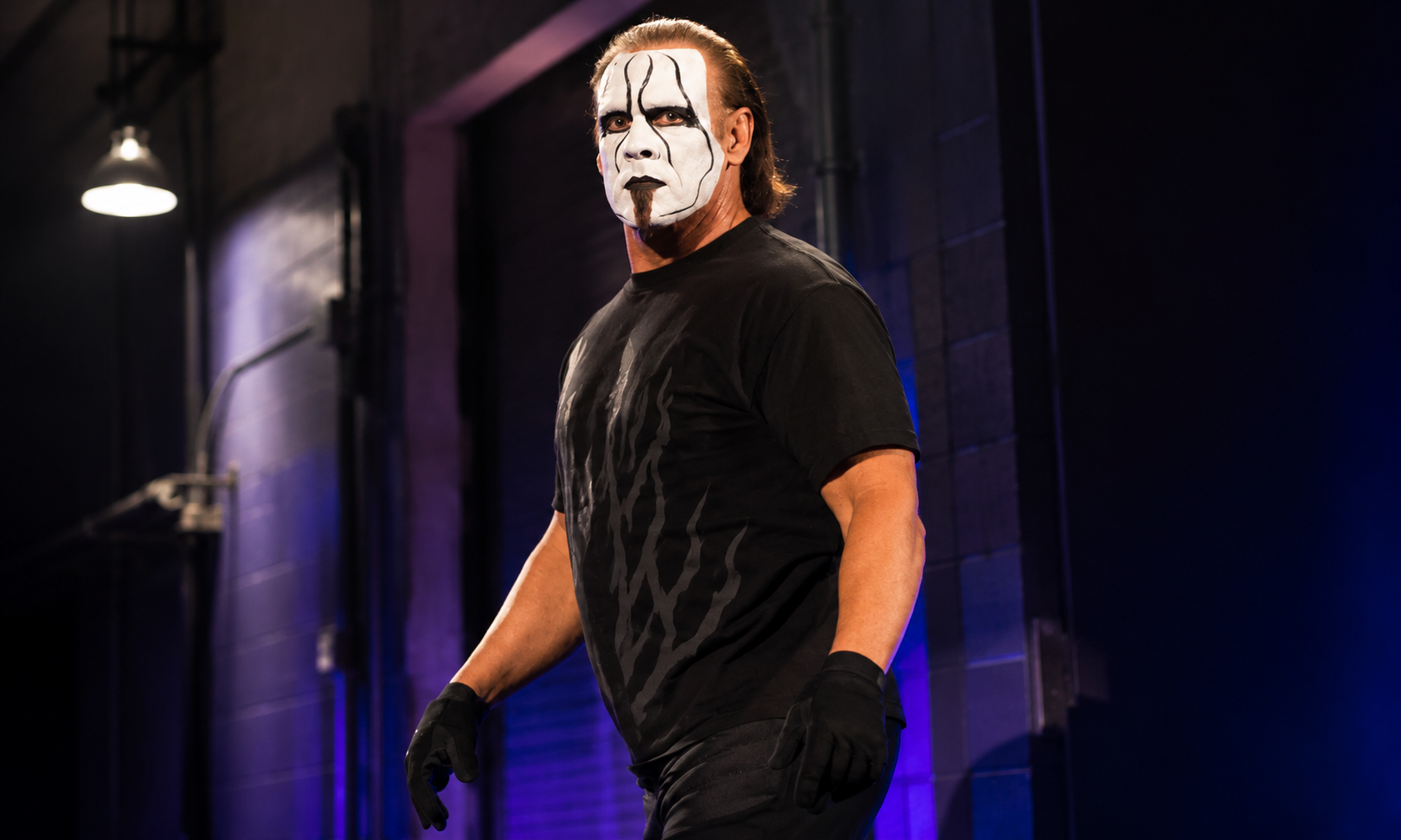
This version of Sting wore black-and-white face paint, carried a baseball bat, spoke less, and became a mysterious figure watching from above during the nWo storyline. It gave his career a completely new life.
The nWo era was one of WCW’s hottest periods, and Sting became the silent hero standing against Hollywood Hulk Hogan and the group trying to take over the company. This version of Sting became so iconic that even fans who missed his early years still recognize the black-and-white look immediately.
Important related phrases include Crow Sting, nWo, Hulk Hogan vs Sting, black and white face paint, WCW Monday Nitro, and The Icon Sting.
1997: Sting vs Hulk Hogan Becomes a Defining Moment
The build to Sting vs Hulk Hogan at Starrcade 1997 was one of the most famous stories of the Monday Night War era. Sting barely spoke for months, yet his presence felt bigger every week.
Fans wanted to see Sting defeat Hogan and strike back against the nWo. The match remains one of the most discussed moments in WCW history, not only because of the rivalry but also because of the controversy around the finish.
This is also why questions like who did Hulk Hogan refuse to lose to sometimes appear near searches about Sting. Wrestling fans often connect Hogan’s career with backstage politics and match results. In Sting’s case, the bigger point is simple: the Hogan rivalry helped turn Crow Sting into a lasting wrestling image.
2001: WCW Ends, but Sting’s Legacy Does Not
When WCW closed in 2001, many fans expected Sting to move straight into WWE. That did not happen. His absence from WWE made him feel even more mysterious.
Sting’s final WCW match came against Ric Flair on the last episode of WCW Monday Nitro, a fitting end because Flair had also been part of Sting’s early rise. WWE’s profile also connects Sting heavily with WCW’s final years and his long history with Flair.
Instead of becoming another former WCW name in WWE right away, Sting stayed away. That decision protected his image. For years, fans kept asking when Sting in WWE would finally happen.
2003–2014: Sting Keeps Going in TNA
Sting later spent many important years in TNA, also known as Impact Wrestling. This part of his career is sometimes overlooked, but it helped keep him active and visible after WCW ended.
In TNA, Sting became a veteran main-event figure. He won championships, worked with a new generation of wrestlers, and added another chapter to his already long career.
This period also matters when discussing WWE Sting age because it shows that he did not simply disappear after WCW. He kept wrestling, kept adapting, and stayed valuable long before WWE finally brought him in.
Use terms like TNA Sting, Impact Wrestling, TNA Hall of Fame, veteran wrestler, and Sting championship wins in this section.
2014: Sting Finally Makes His WWE Debut
Sting’s WWE debut happened at Survivor Series 2014, and it instantly became one of the biggest surprise moments of that year. Fans had waited more than a decade to see The Icon step into a WWE ring.
WWE’s corporate announcement later noted that Sting made his long-awaited WWE debut in November 2014 and went on to have his first WrestleMania match against Triple H at WrestleMania 31.
By the time Sting joined WWE, he was already in his mid-50s. That made his run different from a normal debut. He was not arriving as a new star. He was arriving as a legend fans had waited years to see.
Important terms include Sting WWE debut, Survivor Series 2014, Triple H, The Authority, WrestleMania 31, and WWE Hall of Fame.
2015: WrestleMania 31 and Sting’s Short WWE Run
At WrestleMania 31, Sting faced Triple H in a match built around the old WCW vs WWE feeling. For many fans, just seeing Sting at WrestleMania was special, even if they did not love the result.
His WWE run was short, but it gave fans two major matches: the Triple H match at WrestleMania and the Seth Rollins match at Night of Champions 2015.
The Rollins match became especially important because it changed the direction of Sting’s career. WWE reported after Night of Champions that Sting sustained an injury during his WWE World Heavyweight Title match against Rollins.
What Happened to Sting’s Neck?
Sting’s neck injury happened during his match with Seth Rollins at Night of Champions 2015. WWE later published an interview about the injury, explaining that Sting was thrown into a turnbuckle during the match.
The injury led many fans to believe his wrestling career was over for good. WWE also reported later that Sting said he needed neck surgery to deal with the damage from Night of Champions, although he also said the injury was not affecting his day-to-day life at the time.
This is why searches like Sting neck injury, what happened to Sting’s neck, Seth Rollins Sting injury, and Sting WWE retirement are closely connected.
It is important to discuss this carefully. Wrestling is physical, and injuries can happen even when performers are experienced. Sting himself praised Seth Rollins in the aftermath, so the story should not be reduced to simple blame.
2016: Sting Enters the WWE Hall of Fame
In 2016, Sting was inducted into the WWE Hall of Fame. WWE announced him as part of the Class of 2016, calling attention to his long career and his place in sports-entertainment history.
During his Hall of Fame speech, Sting announced his retirement from the ring. WWE reported that he officially retired during the 2016 Hall of Fame ceremony, one night before WrestleMania 32.
At the time, it felt like the final chapter. Sting had finally appeared in WWE, wrestled at WrestleMania, entered the Hall of Fame, and stepped away after a serious injury.
But with Sting, the story has never been that simple.
2020–2024: Sting Returns in AEW
Sting shocked fans again when he joined AEW in 2020. Considering his age and neck history, many people expected him to appear only as a non-wrestling legend. Instead, AEW carefully brought him back into action.
His partnership with Darby Allin became one of the best late-career pairings in modern wrestling. Darby’s risky style and Sting’s legendary presence worked surprisingly well together.
This AEW run changed how many fans looked at Sting’s final years. He was not just doing nostalgia appearances. He was part of emotional, dramatic matches that helped introduce him to younger viewers.
Important keywords include AEW Sting, Darby Allin, Sting comeback, Sting final run, wrestling legend, and The Icon in AEW.
2024: Sting’s Final Match at AEW Revolution
Sting’s final match took place at AEW Revolution 2024 in Greensboro, North Carolina. He teamed with Darby Allin against The Young Bucks in an AEW World Tag Team Championship match.
AEW’s official results described the match as Sting’s Final Match and confirmed that Darby Allin and Sting defeated Matthew and Nicholas Jackson to remain undefeated AEW World Tag Team Champions at 16-0.
This was a rare wrestling farewell where the legend actually went out on top. Sting’s sons were also involved in the presentation, each representing a different era of his career, which made the night feel personal and emotional. AEW’s official results noted that Sting’s sons were by his side for the match.
Sting was 64 years old at the time of his final match because the match happened on March 3, 2024, before his March 20 birthday. That makes the moment even more impressive when people search WWE Sting age or how old was Sting in his last match.
What Year Did Sting Retire?
Sting’s retirement answer has two parts.
He first announced his retirement in 2016 during his WWE Hall of Fame speech after his neck injury. WWE reported that he officially retired at the ceremony.
However, he later returned to the ring in AEW. His final in-ring retirement came in 2024, after his last match at AEW Revolution.
So the clearest answer is: Sting first retired in 2016, but his final wrestling match and final retirement came in 2024.
What Happened to the WWE Wrestler Sting?
The WWE wrestler Sting did not disappear after his short WWE run. His WWE career effectively ended after the 2015 neck injury against Seth Rollins, and he announced retirement during his 2016 WWE Hall of Fame induction.
Years later, he returned in AEW, where he teamed with Darby Allin and ended his career with a successful final match in 2024.
Today, Sting is retired from active in-ring competition, but his legacy remains strong because he managed to leave wrestling on a high note.
Wrestler Sting’s Net Worth
Wrestler Sting’s net worth is usually reported as an estimate, not a confirmed public number. Some celebrity finance sites place Steve Borden’s net worth around the multi-million-dollar range, often near $8 million to $10 million, but these figures should be treated as estimates rather than official financial records. Celebrity Net Worth identifies the wrestler Sting as Steve Borden and gives an estimated net worth figure for him, while other sites report slightly different numbers.
His income came from decades in WCW, TNA, WWE, and AEW, along with merchandise, appearances, licensing, and wrestling-related work. Unlike Dwayne “The Rock” Johnson, Sting’s wealth is mainly tied to wrestling, not Hollywood or major business ventures.
Who Is the Richest Wrestler of All Time?
The richest wrestler of all time is usually considered Dwayne “The Rock” Johnson. His fortune comes from WWE fame, Hollywood movies, production work, business deals, endorsements, and brands such as Teremana Tequila.
Recent wealth estimates often place The Rock far above most other wrestlers. Celebrity Net Worth, for example, estimates Dwayne Johnson at around $800 million in 2026.
Sting’s legacy is different. He is not discussed as the richest wrestler ever. He is remembered more for longevity, reinvention, loyalty to WCW, and his rare ability to stay respected across different wrestling generations.
Why Sting’s Age Makes His Career So Impressive
The reason WWE Sting age matters is simple: wrestling is not easy on the body. Most wrestlers do not stay active at a high level for decades. Sting did.
He was already a major star in the late 1980s. He was central to WCW in the 1990s. He carried name value in TNA during the 2000s and 2010s. He finally appeared in WWE in 2014. Then, when many fans thought he was finished, he returned in AEW and had his final match in 2024.
That means fans saw versions of Sting across the 1980s, 1990s, 2000s, 2010s, and 2020s.
Very few wrestlers can say that.
Sting’s Legacy as The Icon
Sting’s career is special because he reinvented himself without losing the audience. Surfer Sting felt like a bright comic-book hero. Crow Sting felt dark, serious, and mysterious. The Icon Sting became the respected veteran who did not need to say much to get a reaction.