Wonder Woman Silver Age: Powers, Origin, Villains, and the Weirdest Stories Explained
The wonder woman silver age era is one of the strangest, most fascinating chapters in DC Comics history. If you only know Diana from modern comics, movies, or the more myth-heavy stories where she feels like a warrior princess straight out of Greek legend, the Silver Age version can feel almost like a different character.
This was the era of Wonder Girl, Wonder Tot, wild romance plots, oddball villains, impossible family adventures, and stories where Princess Diana could be heroic one moment and trapped in a bizarre dating or transformation plot the next. It was colorful, messy, sometimes funny, sometimes frustrating, and very much a product of its time.
For readers trying to understand Silver Age Wonder Woman, the best way to look at it is this: DC was trying to keep one of its most famous heroines alive in a changing comic-book market. The result was a version of Wonder Woman that mixed Amazon mythology, superhero adventure, romance comics, fantasy, sci-fi, and some truly weird ideas that still get discussed by fans today.
What Was the Silver Age of Wonder Woman?
The broader Silver Age of Comic Books is usually dated from the mid-1950s to around 1970. Britannica places the Silver Age around 1956–1969, beginning with DC’s superhero revival and leading into the more socially aware Bronze Age.
For Wonder Woman comics, the Silver Age shift is usually tied to Wonder Woman #98, published in May 1958. That issue brought in artists Ross Andru and Mike Esposito, and it marked a clear change from the older Golden Age style into a more modern DC superhero format.
DC’s collected editions also support this timeline. Wonder Woman: The Silver Age Omnibus Vol. 1 collects Wonder Woman #98–123, while Vol. 2 continues with Wonder Woman #124–149.
That makes the Wonder Woman Silver Age especially useful for readers who want to follow Diana’s change from her Golden Age roots into the more playful, sometimes confusing, and often bizarre world of 1950s and 1960s DC.
How Wonder Woman’s Origin Changed in the Silver Age
One of the biggest changes came in Wonder Woman #105, where Diana’s origin was given a Silver Age refresh. Instead of leaning heavily on the older World War II background, the story pushed her more into a mythic superhero mold.
In this version, Diana’s powers were described as gifts from the gods. She was blessed to be beautiful like Aphrodite, wise like Athena, stronger than Hercules, and swifter than Mercury. The same revamp also removed many World War II references from her origin and added a new rule that Paradise Island would be destroyed if a man ever set foot on it.
This matters because many modern fans ask, “Is Diana the daughter of Zeus?” In the Silver Age Wonder Woman stories, the answer is no. The Zeus daughter idea belongs to much later modern continuity, especially the New 52 era, where Diana is rewritten as the natural-born daughter of Hippolyta and Zeus.
So if you are reading classic Wonder Woman comics, don’t expect one clean, modern origin. Diana’s backstory has changed many times, and the Silver Age origin is its own version of the character.
Wonder Woman Silver Age Powers Explained
The wonder woman silver age version of Diana still had the core traits fans expect from the Amazon Princess. She was strong, fast, brave, skilled, and deeply connected to Paradise Island. But the way her powers worked could feel different from modern stories.
Her main abilities included super strength, speed, wisdom, and Amazon training. The Silver Age also gave her the ability to glide on air currents, which is not the same as the full flight many readers connect with modern Wonder Woman.
She also had her famous tools: the magic lasso, her bracelets, her tiara, and her invisible plane. Earlier stories had already expanded some of these items in strange ways. Her earrings could help her breathe in outer space, her tiara could work like a boomerang, and one bracelet even had a two-way wrist radio for contacting Paradise Island.
That is part of the fun and weirdness of Silver Age DC Comics. Powers and gadgets were often treated like whatever the story needed that month. One issue might feel mythic. Another might feel like science fiction. Another might turn into a romance plot with a strange new rival for Steve Trevor.
Paradise Island and the Amazon World
Paradise Island, later more commonly known as Themyscira, was central to Diana’s Silver Age world. It was her home, her source of identity, and the place that tied her to Queen Hippolyta and the Amazons.
But the Silver Age version of Paradise Island was not always written with the same depth that modern readers expect. It was magical, dramatic, and sometimes used mostly as a plot device. The new rule that the island would be destroyed if a man set foot on it gave writers an easy way to create danger, secrecy, and romantic tension.
This also made Steve Trevor more complicated as a character. Diana loved him, protected him, and often built stories around him, but her Amazon world also had strict rules that kept men away. That tension shaped many classic Wonder Woman stories from this period.
Wonder Girl, Wonder Tot, and the Wonder Family Era
The most famous weirdness from this era is the Wonder Family setup. In the 1960s, writer Robert Kanigher introduced Diana’s “untold” teenage adventures as Wonder Girl, followed by Wonder Tot, a toddler version of Diana who had her own impossible adventures. These younger versions later appeared alongside adult Wonder Woman in “Impossible Tales,” with Queen Hippolyta joining as Wonder Queen.
For modern readers, this can be confusing. Wonder Girl was not originally a separate sidekick. She started as a younger version of Diana. Over time, because of how these stories were handled and how Wonder Girl appeared elsewhere, the confusion helped lead to the creation of Donna Troy. ComicsAlliance also points out that Wonder Woman shared much of this era with her teenage and toddler selves, and that this odd setup eventually contributed to Wonder Girl being treated as a separate person in Teen Titans.
This is why the wonder woman silver age period matters even when the stories seem silly. Some of the strangest ideas later shaped important pieces of Wonder Woman lore.
Silver Age Wonder Woman Villains
The Silver Age Wonder Woman villains were not always dark or serious. Many were gimmick-heavy, strange, or built around one odd idea. That was common in Silver Age comics, where superheroes often faced aliens, evil doubles, magical objects, mad scientists, monsters, and bizarre criminals.
This era includes villains and threats like Angle Man, Paper-Man, and Egg Fu, along with plenty of unusual one-off enemies. Some of them are memorable because they are so imaginative. Others are uncomfortable today because they reflect dated stereotypes or old-fashioned writing choices that have not aged well.
Still, these villains are part of why Silver Age Wonder Woman stands out. Her world did not feel like Batman’s noir crime stories or Superman’s cosmic adventures exactly. It sat somewhere between mythology, fairy tale, romance comic, and superhero fantasy.
The Weirdest Wonder Woman Silver Age Stories
If there is one reason modern fans still talk about the Wonder Woman Silver Age, it is the weirdness. This period had giants, evil doubles, aliens, dinosaurs, strange transformations, romance rivals, and stories that feel almost dreamlike when read today.
ComicsAlliance described the era as full of “giants, evil doppelgangers, aliens, and dinosaurs,” while also noting the heavy romance angle with odd love interests like a merman and a bird man.
That tone can be entertaining if you know what you are getting into. These are not smooth modern superhero arcs. They are fast-moving, strange, sometimes repetitive, and often built around a single wild hook. A cover might show Diana in danger, transformed, duplicated, trapped, or forced into some emotional challenge that looks impossible to explain.
For some readers, that makes the era hard to take seriously. For others, it is exactly why classic DC comics are fun. The stories have a kind of anything-can-happen energy that modern superhero comics rarely use in the same way.
Steve Trevor and the Romance-Heavy Silver Age
Steve Trevor was a huge part of Silver Age Wonder Woman stories. In many issues, the emotional engine of the plot was not only Diana saving the day, but Diana dealing with love, jealousy, marriage pressure, secret identity problems, or romantic competition.
This is one of the biggest reasons the era divides fans. Golden Age Wonder Woman had a stronger feminist edge under William Moulton Marston. By the Silver Age, especially after the rise of the Comics Code Authority, Diana was often written in a more traditional romantic mold. She still fought villains and saved people, but many stories made her feelings for Steve a central focus.
That does not mean every story is bad. Some are charming in a strange old-comics way. But if you are reading Wonder Woman Silver Age comics today, it helps to understand that romance was not just a side detail. It was often one of the main selling points.
Why Fans Have Mixed Feelings About Silver Age Wonder Woman
Fans usually react to Silver Age Wonder Woman in two ways.
Some enjoy it because it is colorful, unpredictable, and full of pure comic-book imagination. The stories move quickly. The covers are bold. The ideas are strange. The world feels less controlled than modern continuity.
Others struggle with it because Diana often feels less powerful as a feminist icon than she did in earlier Golden Age stories or later modern runs. Comic Book Herald’s Silver Age discussion is especially critical of how this era softened, redirected, or misunderstood some of the character’s original themes of empowerment.
Both reactions make sense. The wonder woman silver age era is historically important, but it is not always easy to love without context. It is best read as a transitional period: a time when DC was trying to keep Wonder Woman alive, but not always sure what made her special.
The End of the Silver Age and the Diana Prince Era
By the late 1960s, DC tried something dramatic. In 1968, under Denny O’Neil and Mike Sekowsky, Wonder Woman gave up her Amazon powers and status so she could stay in Man’s World instead of leaving with the Amazons. Diana then moved into a very different phase, running a boutique and becoming more of a martial-arts adventure heroine than a traditional superhero.
This is often called the Diana Prince era or the I Ching era. Atomic Junk Shop describes Wonder Woman #178 as a major transition point and argues that it can be seen as the end of Wonder Woman’s Silver Age, even if the line between the Silver and Bronze Ages is not perfectly clean.
This shift was controversial. Some readers liked the fresh style. Others felt DC had removed the very things that made Wonder Woman powerful and unique. Her traditional costume, Amazon powers, and status were restored in Wonder Woman #204 in 1973.
Best Silver Age Wonder Woman Comics to Read First
If you want to start reading Silver Age Wonder Woman, the cleanest entry point is Wonder Woman: The Silver Age Omnibus Vol. 1. It collects Wonder Woman #98–123, including the early revamp period, the teenage Diana material, Wonder Tot, and the stronger push toward the Wonder Family style.
After that, Wonder Woman: The Silver Age Omnibus Vol. 2 continues with Wonder Woman #124–149, giving readers more of the 1960s version of Diana and her increasingly strange world.
For key single issues, Wonder Woman #105 matters because of the revised Silver Age origin. Wonder Woman #178 matters because it signals the move toward the depowered Diana Prince era.
Collectors also search for Wonder Woman Silver Age comics because original issues from this period carry historical value, especially when they are tied to major changes, first appearances, or unusual covers. But for most casual readers, the omnibus editions are the easier way to experience the era without hunting down individual back issues.
How Old Is the Silver Age?
The Silver Age of Comic Books is usually placed from 1956 to around 1970, though some sources use 1969 as the ending point. That makes it roughly a 13-to-14-year era, depending on how the timeline is counted.
For Wonder Woman, the Silver Age is most closely linked to the period starting with Wonder Woman #98 in 1958 and running through the late 1960s, before the Diana Prince makeover fully changed the direction of the book.
Is Diana the Daughter of Zeus?
In the Silver Age Wonder Woman origin, Diana is not the daughter of Zeus. Her powers are presented as divine gifts from different gods, including Aphrodite, Athena, Hercules, and Mercury.
The idea that Diana is the daughter of Zeus comes from later modern continuity, especially the New 52 version of Wonder Woman.
Are Wonder Woman’s Bracelets Silver or Gold?
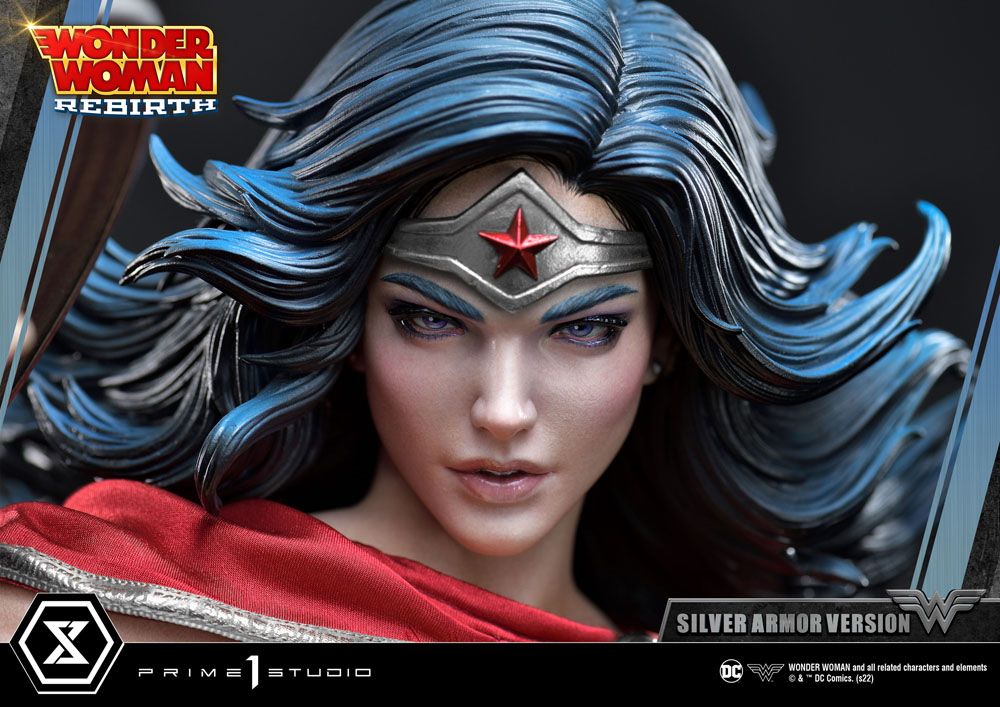
Classic Wonder Woman bracelets are usually associated with a silver look, especially in older comic imagery and fan discussion. They are often called the bracelets of submission in traditional Wonder Woman lore. In modern costumes, artists sometimes change the metal tone, trim, or armor style, so they may appear more silver, gold, bronze, or mixed depending on the version.
For the wonder woman silver age topic, “silver bracelets” fits the classic look better than gold.
What Is Wonder Woman’s Favorite Food?
Wonder Woman does not have one universally fixed favorite food across all major DC continuity. Different comics, shows, and adaptations have played with Diana discovering food from Man’s World, but there is no single Silver Age answer that works as official canon.
For a fun reader-friendly note, many modern fans connect Diana with foods like ice cream because of later adaptations, but that is not really a Silver Age Wonder Woman detail.
Why the Wonder Woman Silver Age Still Matters
The wonder woman silver age era is not the cleanest or most powerful version of Diana, but it is one of the most revealing. It shows how DC tried to reshape a major heroine during a period when superhero comics were being rebuilt for a new generation.